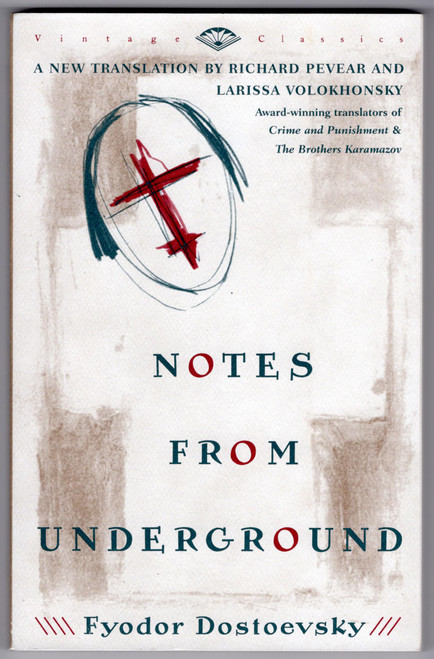


“I am a sick man… I am a wicked man.” With this shocking declaration, Fyodor Dostoevsky launched one of the most groundbreaking works in world literature. Notes from Underground stands at a threshold—not only between nineteenth- and twentieth-century fiction, but between two radically different visions of the human self. Its nameless narrator is a fractured consciousness: a man of many selves, all in conflict with one another, and with the world at large.
Now, Richard Pevear and Larissa Volokhonsky—renowned for their definitive English translations of Crime and Punishment and The Brothers Karamazov—offer a superb new rendering of this classic, capturing both its tragic depth and its dark, ironic comedy.
About the Author
Fyodor Mikhailovich Dostoevsky (1821–1881) lived a life as turbulent as his novels. Born in Moscow, he achieved sudden success with his debut Poor Folk (1846), but his career was abruptly interrupted in 1849 when he was arrested for alleged subversive activity against Tsar Nicholas I. After eight months of solitary confinement, he was led before a firing squad, dressed in a death shroud and facing an open grave—only to be spared at the last moment when a reprieve was announced. His sentence was commuted to four years of hard labor in Siberia, where he endured brutal conditions and developed the epilepsy that would plague him for the rest of his life.
This harrowing experience, combined with his deepening religious convictions, shaped the great novels to come. Following a period of destitution made worse by his gambling addiction, Dostoevsky’s marriage to Anna Snitkina gave him the stability to complete his masterpieces: Crime and Punishment (1866), The Idiot (1868–69), The Possessed (1871–72), and The Brothers Karamazov (1879–80). At his death in 1881, Dostoevsky left a body of work that transformed modern literature and secured his place among the greatest writers of all time.