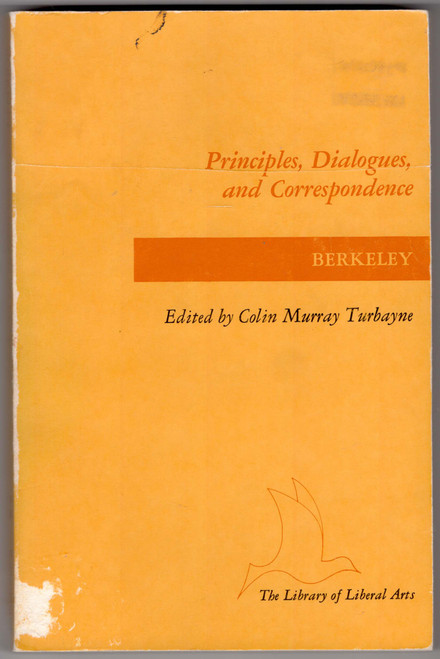


Principles, Dialogues, and Philosophical Correspondence brings together George Berkeley’s foundational works on philosophy—including his seminal Principles of Human Knowledge and the vivid Three Dialogues Between Hylas and Philonous—alongside key exchanges from his lifetime. This edition, edited with an introduction by Colin Murray Turbayne, offers readers both Berkeley’s radical argument for immaterialism (that material objects exist only as ideas perceived by minds) and lively dialectical explorations of empiricism and perception, enriched with contextual insight from correspondence that reveals how his ideas were debated and defended in his own era.
About the Author
George Berkeley (1685–1753) was an Irish philosopher and Anglican bishop, best known for developing immaterialism (later called idealism) — the view that physical objects exist only insofar as they are perceived. One of the major figures of early modern philosophy, his critiques of material substance and abstraction challenged the dominant empiricist traditions established by Locke and influenced later thinkers ranging from Hume to Kant. Berkeley’s philosophical works span metaphysics, perception, language, and religion, and continue to be studied for their bold rethinking of the relationship between mind and world.