
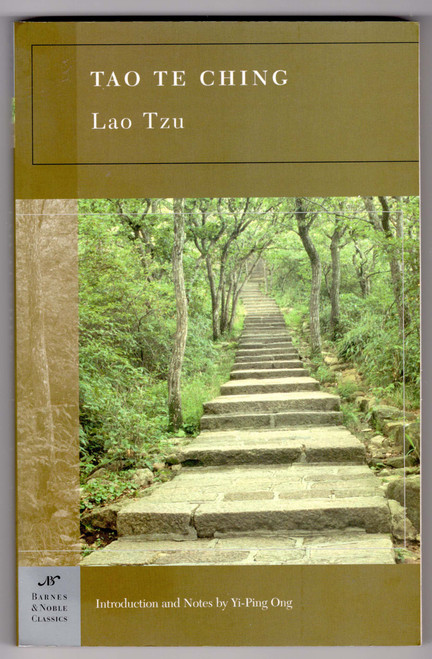


Tao Te Ching is one of the foundational texts of Daoist philosophy, traditionally attributed to Lao Tzu, offering a profound meditation on harmony, simplicity, and the natural flow of existence known as the Tao (“the Way”). In this accessible Barnes & Noble Classics edition, translated by Charles Muller with an insightful introduction and notes by Yi-Ping Ong, the text is presented as both a poetic and philosophical guide to living with balance, humility, and non-action (wu wei). Rather than prescribing rigid moral rules, the Tao Te Ching invites readers to observe the patterns of nature and align themselves with its effortless unfolding. Its brief, aphoristic chapters continue to influence philosophy, spirituality, leadership theory, and literature across cultures and centuries.
About the Author
Lao Tzu is the semi-legendary figure traditionally credited with composing the Tao Te Ching around the 6th century BCE. Often regarded as the founder of philosophical Daoism, little is historically certain about his life, and some scholars debate whether he was a single individual or a composite figure. Regardless of authorship debates, Lao Tzu’s teachings have had a lasting influence on Chinese thought, emphasizing naturalness, simplicity, humility, and alignment with the Tao as the underlying principle of the universe.


