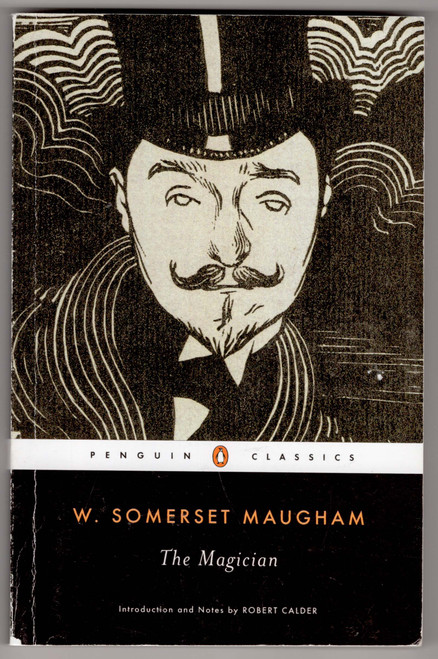


In W. Somerset Maugham’s The Magician, a young English medical student in Paris becomes entangled in the orbit of the enigmatic and unsettling Oliver Haddo, a figure of immense charisma and disturbing occult ambitions. As the story unfolds, Haddo’s fascination with forbidden knowledge, dark ritual, and the pursuit of supernatural power grows increasingly sinister, placing those around him—especially the innocent Margaret—at grave risk. Often read as a veiled fictional portrait of Aleister Crowley, the novel blends psychological tension, gothic atmosphere, and philosophical unease, questioning the boundaries between science, mysticism, obsession, and moral corruption. This Penguin Classics Edition includes an introduction and notes by Robert Calder, offering valuable scholarly context that deepens Maugham’s critique of fin-de-siècle occultism and modern rationality.
About the Author
W. Somerset Maugham (1874–1965) was one of the most widely read English writers of the early twentieth century, known for his clarity of style, sharp psychological insight, and cosmopolitan perspective. Trained originally as a physician, Maugham turned to literature and achieved international success as a novelist, playwright, and short story writer. His major works include Of Human Bondage, The Moon and Sixpence, and Cakes and Ale. Drawing on extensive travel and experience abroad, he often explored themes of desire, illusion, morality, and the contradictions of human nature. Though sometimes regarded as outside the modernist canon, Maugham remains celebrated for his narrative accessibility and penetrating social observation.