
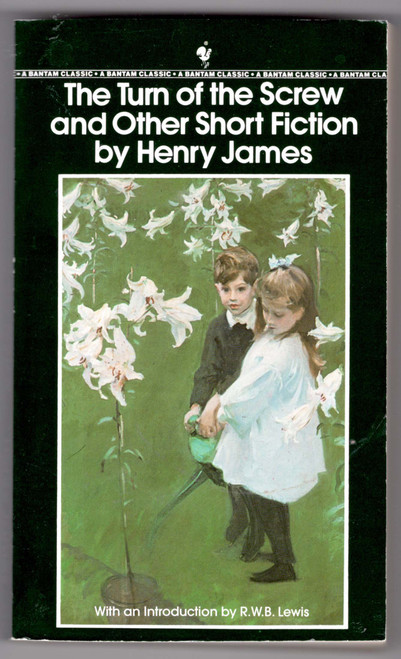


Few writers in the English language have probed the ambiguities of consciousness, memory, desire, and moral perception with the precision of Henry James. The Turn of the Screw and Other Short Fiction—this 1981 Bantam Classics edition, featuring an insightful introduction by R. W. B. Lewis—gathers five of James’s most enduring shorter masterpieces, each revealing a different facet of his psychological and artistic genius. In The Turn of the Screw, a young governess confronts what may be supernatural evil—or the unraveling of her own mind—within an isolated English estate. Daisy Miller follows a spirited young American woman abroad whose innocence and independence collide with the rigid codes of European society. Washington Square offers a quietly devastating study of love, inheritance, and emotional manipulation centered on the unforgettable Catherine Sloper. In The Beast in the Jungle, a man waits his entire life for a destiny he believes is coming—only to confront a far more tragic revelation. And The Jolly Corner transforms the haunted house tale into a haunting meditation on identity, regret, and the lives we never lived. Together, these works showcase James at his most psychologically subtle, morally complex, and artistically daring. Supported by Bantam publication data for this edition.
About the Author
Henry James was one of the most influential literary figures of the late nineteenth and early twentieth centuries. Born in New York City in 1843, James spent much of his life between America and Europe, and his fiction often explores the tensions between New World innocence and Old World sophistication. A master of psychological realism, narrative ambiguity, and interior consciousness, he produced such landmark works as The Portrait of a Lady, The Ambassadors, and The Wings of the Dove. His influence extends from literary modernism to contemporary psychological fiction, and he remains central to the study of Anglo-American literature. James later became a British citizen and died in 1916.


